
During the New Year’s holiday period, my wife and I visited Naples and its surroundings. Our main interest was to visit the various Roman ruins, and to see the famous wall frescoes with our own eyes.
The volcano near Naples, Mount Vesuvius, erupted in 79 AD, causing one of the deadliest eruptions in history. Vesuvius violently ejected millions of tons of molten rock, pulverized pumice and hot ash and destroyed several Roman towns and settlements in the area. The most famous excavations are the towns of Pompeii and Herculaneum, and the archaeological explorations have revealed much of the urban infrastructure and the lives of the inhabitants. Other notable excavations are 2 large villas in Stabiae and the Villa Poppaea in Oplontis. The area now forms the Vesuvius National Park and it is a worthy UNESCO World Heritage Site.
We spent our first day at the impressive and inspiring Museo Archeologico de Napoli (MAN – the Archeological Museum of Naples) where a lot of the findings are exhibited. The museum has a large collection of statues, pottery, jewellery and many of the saved frescoes, like this detail below. A stunning collection of ancient art.
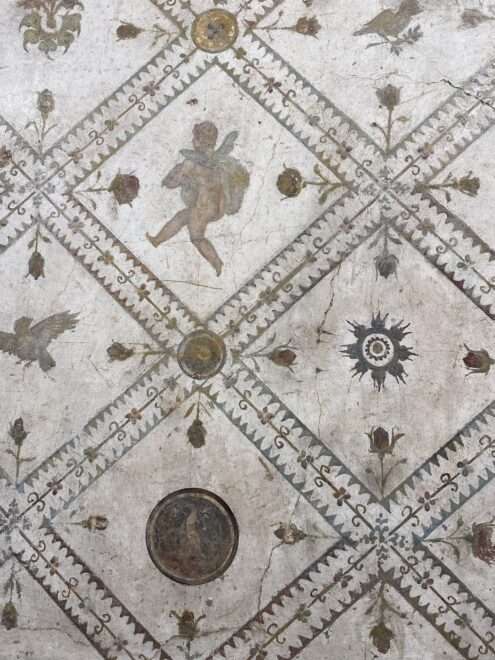
A detail of a wall fresco from one of the villas in Pompeii
The following days we visited Herculaneum and Pompeii. What an impressive urban planning and development in both cities, and amazing to see this in such detail after the excavations. Just look at the pavement of the main road through Herculaneum.
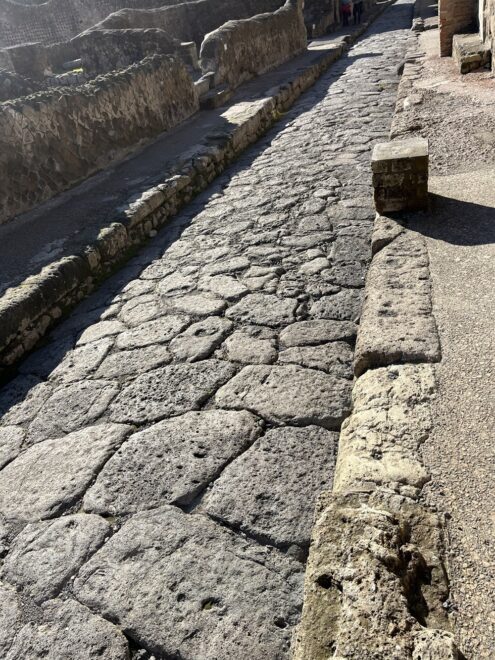
The excavations are well done, and you can imagine what life must have been like before the disaster struck. There are corner bars with cooking pots still in place, there are amphora in storeroom, there are even some wooden details (although totally carbonised). They found imprints of people in the tuff, and there are skeletons in the boathouses in Pompeii. What struck me most is the fact that both historical cities appear to continue under the modern urban developments, and therefore excavations have not continued. There is more to discover!
Later in the week we visited the 2 individual roman villa excavations in Castellammare di Stabia and we went to the Villa Poppaea in Oplontis. The frescoes in the villas are amazing, and it gives an impression of how beautiful the interior of these buildings must have been before the eruption of Vesuvius. The colours are still so vivid, and the detail of some of the paintings is astonishing.
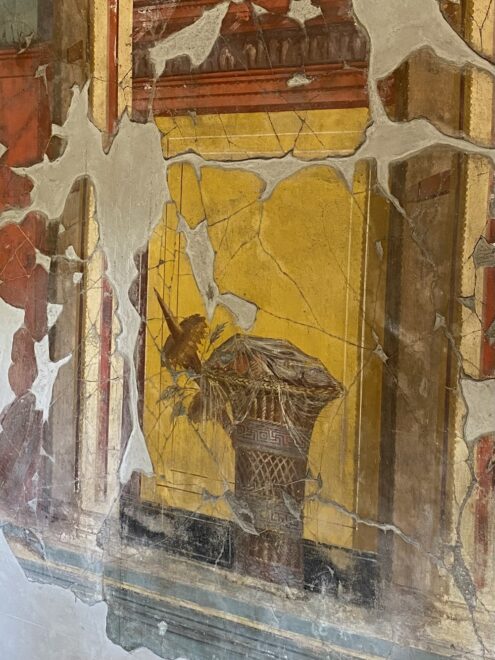
Fresco in Villa Poppaea, Oplontis
As a geographer, one of my real surprises was the extend of the damage from the explosion. This photo from Herculaneum shows the immense volume of earth that was dumped on the city. There is talk of 30 to 60 metres of debris, and you can see the “cliff” on the far side of the trench. All of that is volcanic material that was deposited in the matter of days, during and after the eruption. An unbelievable force of nature.
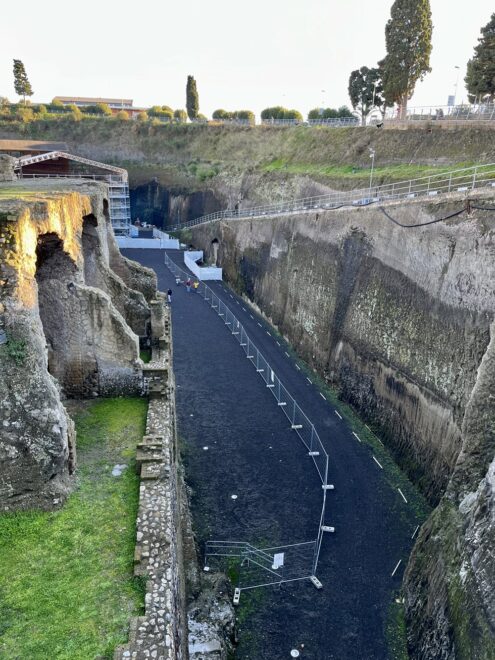
A cliff of volcanic sediment in Herculaneum
When you look at it closer, it looks and feels like concrete. I read that what was dust and loose material when it was deposited, hardened after the heavy rains. Now, the matrix is as hard as stone, and it includes fragments of volcanic rock. It gives an indication of the difficulty of the excavations, but it also is a tantalizing thought that there is most likely much more to be explored.
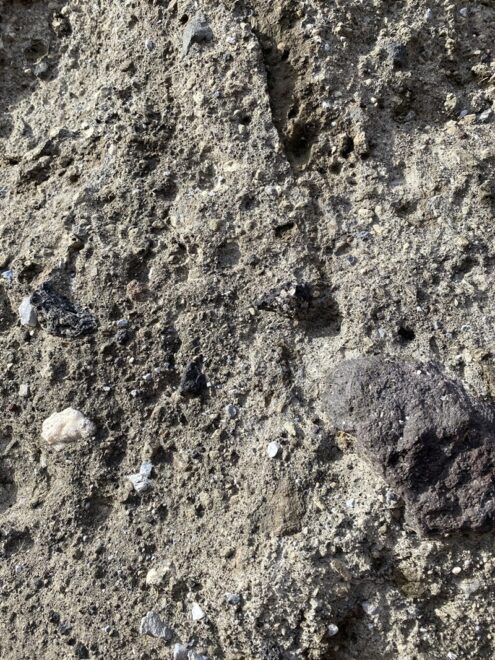
Close-up of the volcanic tuff
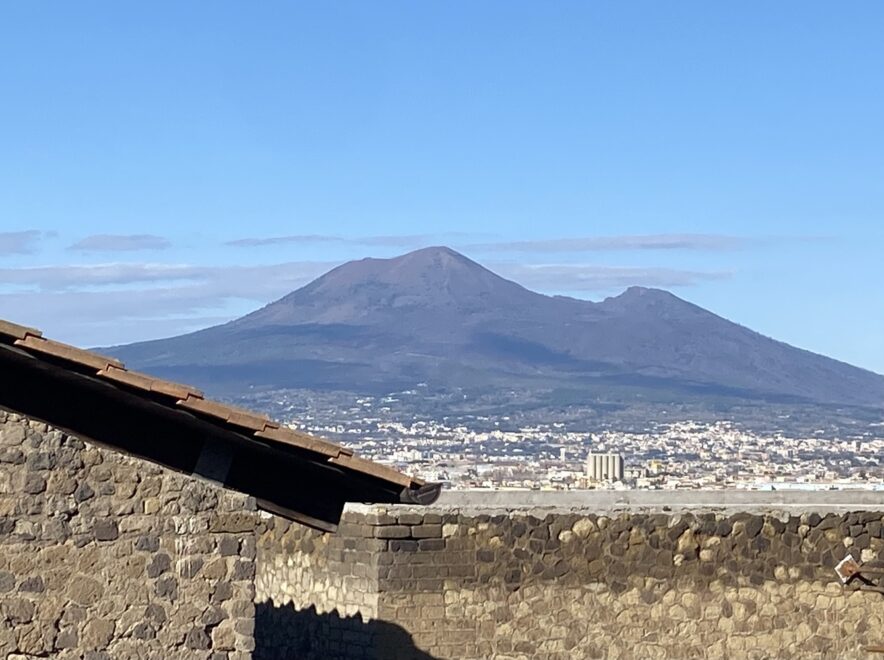
What an amazing location to visit, and a very sobering thought that the Vesuvius is looming, not far away.

0 comments
Write a comment