
November in Sicily has its own unmistakable rhythm. Farm gates sit slightly ajar, cars and small trucks line the narrow country roads, and everywhere you hear the soft clatter of rakes and nets as families harvest their olives. By late autumn, the trees are heavy with fruit, and November becomes, without question, the month of olives.

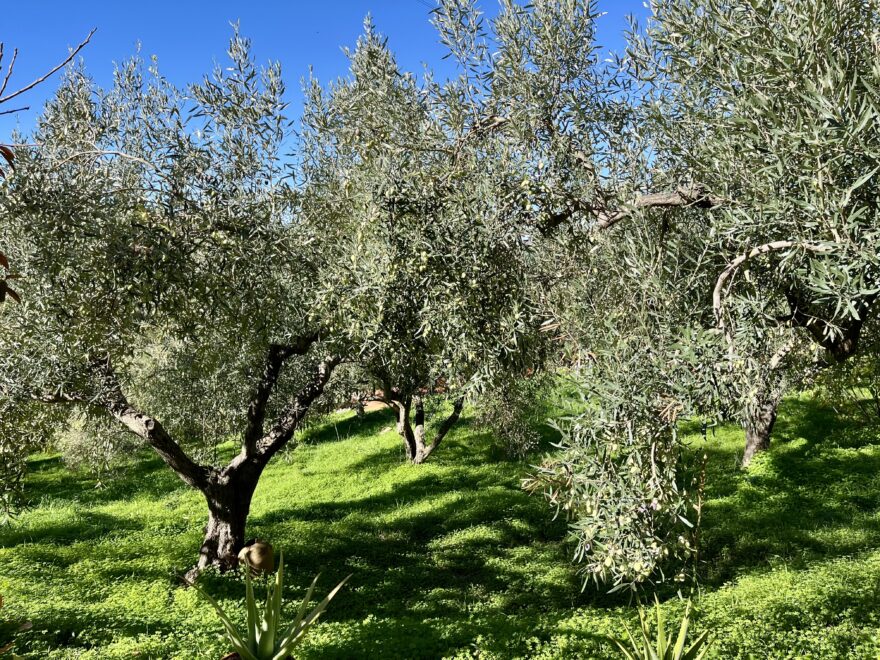
When we bought our small house on the lower slopes of the Madonie Mountains in northern Sicily, we knew it came with 20 olive trees. This year was our first proper harvest. In Sicily, olive picking is still done almost entirely by hand using small plastic rakes, long poles, and big nets spread beneath each tree — a tradition that goes back thousands of years. The island has more than one hundred native olive varieties, and some individual trees have been standing for centuries, especially around the Madonie and Nebrodi mountains. Our trees are not that old, but they have a good size.
The process starts with the right equipment. We planned to buy nets, stakes, and rakes, but when our neighbour heard that we intended to spend money, he told us off and insisted we borrow his gear instead. Sicilian rural life thrives on lending and helping each other, and refusing a neighbour’s offer is almost an insult.

Ready at last, we headed into the garden. Some trees were loaded with olives, others much less so. Locals had warned us that 2025 was a poor year for olive production across Sicily — something that happens regularly because many local varieties are biennial bearers, producing heavily one year and lightly the next. It made us wonder what our trees would look like in a truly good season.
The first task is to spread the net around the base of the tree. This instantly revealed why everyone had told me earlier this year to cut the young shoots under the tree. Without clearing that undergrowth, you can’t get the net close to the trunk and you lose half the olives. A Sicilian lesson learned.
Getting the olives off the branches is the heavy work. I saw some of our neighbours using an electric tool called a scuotitore, but we stuck with hands, plastic rakes, and the occasional climb up into the branches. The islands’ terrain doesn’t help either — most olive groves in northern Sicily grow on hillsides, which means everything you do is at an angle. This is what the stakes are for, to keep olives rolling off the nets when they hit the ground.
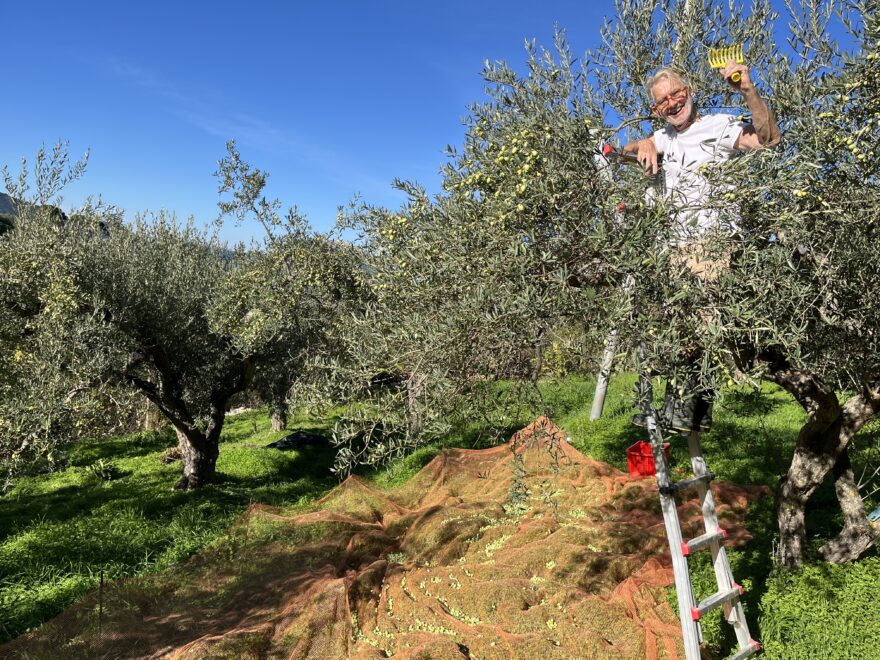
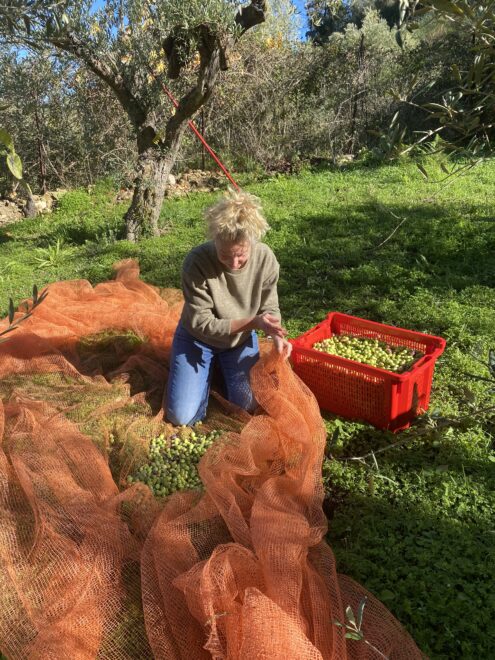
When we felt the trees were stripped enough, we gathered the olives into crates. Many farmers throw leaves and little branches in with the harvest and leave the cleaning to the mill, but we sorted ours by hand. After two long days, we filled the ten crates we had bought.
We thought that was it, but our builder dropped by, laughed at how many trees were still untouched, and lent us four more crates. That meant another day of labour, but by the end we had fourteen crates full of beautiful green and black olives.
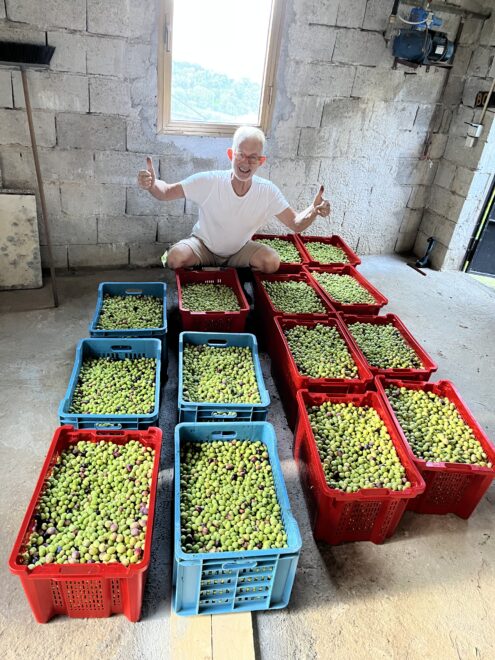
Pressing came next. Luckily, our local olive mill is a small, family-run operation, and it is located just down the road. Sicily presses more than 50,000 tonnes of olives each year, and during November these mills work almost around the clock. Our crates were emptied into a container and weighed: 340 kilograms of olives from three days of work.
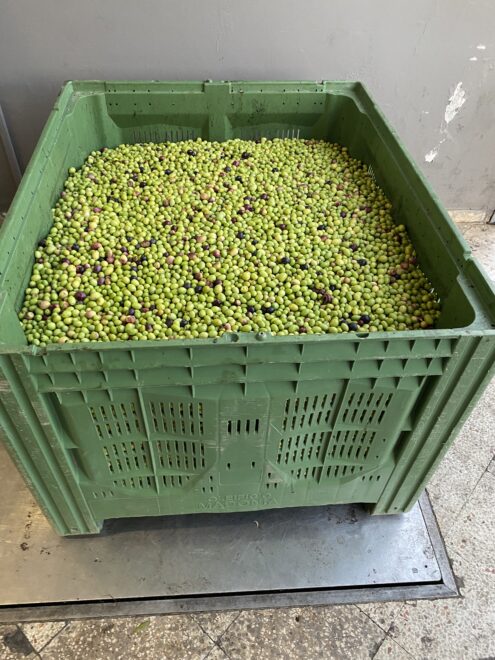
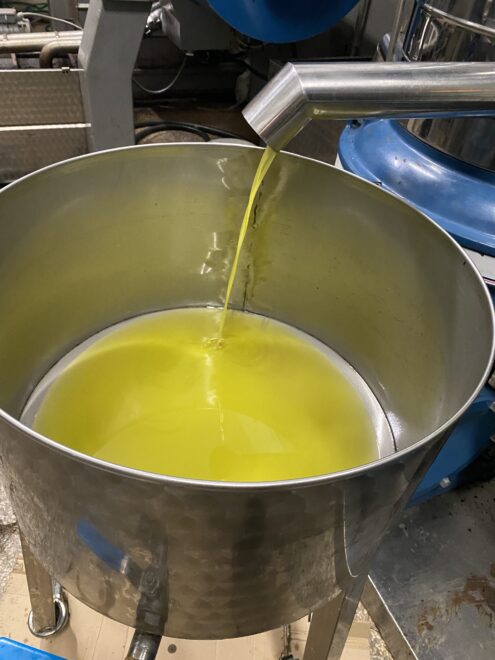
We waited our turn, surrounded by local farmers who were chatting about rainfall, winds, and which variety ripened early this year. Such a pity that my Italian is not up to gossip and chit-chat. Finally, around 7pm, our olives were poured into a huge steel funnel feeding the press — a machine that washes, crushes, and warms the olives until the oil finally emerges. We had hoped for 30–40 litres of oil, but we ended up with 49 litres of bright green, peppery, fragrant olive oil — our very own Sicilian liquid gold.

0 comments
Write a comment